Thursday, October 16, 2014

An Industrialized World

Question 5: Of those plants we have so far studied, which in your opinion has had the greatest impact on world history. Justify and explain your answer.

It is nearly impossible to decide which plant has impacted world history the most. However, within the constraints of our class and my own knowledge, I have to choose cotton. Why, you might ask? 

American History of Cotton

Well, perhaps I'm biased as a native of the Southeastern United States, home grown in a place where cotton changed history forever: Atlanta, Georgia. Cotton built Georgia's robust economy while simultaneously demanding the mass importation of slaves from Western Africa. This morally reprehensible practice ultimately led to the American Civil War, where Atlanta was burned to the ground at the hands of General Sherman. Later, after the challenging reconstruction era and the horrors of racism, the Civil Rights Movement finally occurred making Atlanta a stronghold for black American culture and racial integration. That's just a short version of the story. Needless to say, cotton had a colossal effect on The United States. However, rather than focusing on the history of America, I will instead discuss another impact that cotton had on the world: the advent of the Industrial Revolution. 
Picking cotton was a grueling task
A New Age
The Industrial Revolution began in the late 1700s and marks a huge turning point in history; almost every aspect of daily life was affected in Britain and it spread to the rest of the world. Indeed, as a student of Environmental Studies I have learned over and over again that the Industrial Revolution changed the world as we know it. Not only did it it increase carbon emissions, it led to unprecedented population growth. On the positive side, people's standard of living generally improved (although I'm not sure the factory workers would agree). Why did this all happen? Well, based on the topic of my post I'm sure you can guess....

Cotton. 
An image of Manchester during the Industrial Revolution,
textile manufacturing hub and the world's first industrial city. 
New Inventions
Textile manufacturing in Britain marked the initiation of the Industrial Revolution. Early inventions and innovations include the rolling spinner machine and the spinning jenny. These new machines were produced for the sole purpose of producing cotton as quickly as possible. Indeed, "Mechanized cotton spinning powered by steam or water increased the output of a work by a factor of about 1000." Later on, American Eli Whitney invented the cotton gin which was equipped to remove the seeds from cotton, exponentially speeding up the process and reducing human labor needs. Years later, the Industrial Revolution would continue to lead to urbanization, the development of better transportation, and more. It changed the world permanently and globally, all because cotton led to the invention of new machines and labor practices. One small plant changed the world in a huge way, for better or for worse I can not be sure.  
The spinning jenny, invented by James Hargreaves in 1764. 
You can watch a video about the spinning mule (a similar invention) here.

Friday, October 10, 2014

The Company That Owned Nations

Question 4: Draw together and explain the roles of cotton, tea and opium in the business and success of the British East India Company.

The idea of a company ruling country (or a few) is somewhat ridiculous in the modern world. Sure, Apple has the world at it's beck and call every time a new product is released but they certainly can't claim ownership of China or the United States. But The British East India Company actually acted as an agent of British imperialism in India. That's right, they were the governing body for India and held a monopoly on trade in most of Southeast Asia. They first ventured into the eastern part of the world for spices and ultimately ended up controlling the cotton, tea, and opium trade. In fact, The British East India accounted for more than 50% of global trade at one point during its powerful reign. 


Cotton and Tea: British Necessities The British East India Company (which I will now refer to as EIC) took control of India, taking advantage of their cheap labor and good soil for cotton cultivation and importing the cotton back to the English cotton mills. Additionally, EIC attempted to penetrate China's trade barriers in search of tea and other unique goods. At this time, China barred westerners from trading in their country. However, England was addicted to tea so they made it work. When EIC finally managed to set up trade for tea, China only accepted silver and gold as payment which was rather inconvenient. As a result, EIC had a significant trade deficit with China. What was their solution?


Tea Clippers were extremely fast ships designed to carry tea from India and China to England.
Opium: A Substitute for Silver 
Well as history has proved time and time again, addictive substances are the most lucrative goods to trade. It was certainly true for tobacco and so England got China hooked on opium. It all began when Warren Hastings - an EIC leader in India - established a colonial monopoly over Bengalese opium. Because it was questionable for EIC to trade opium directly, they sold copious amounts of the addictive drug to "legitimate merchants" in order to wash their hands of the illegal activity. Not so mysteriously the opium ended up in China and EIC ended up with silver coins in their pockets once again to exchange for tea. In some ways, it was a brilliant trading scheme but overall it was entirely immoral and resulted in mass drug addiction for China. By 1906, 13.1 million people or 27% of the Chinese population was addicted to opium. 


To get a feel for the British East India Company's tea and opium trade, try playing this computer game. You can actually be an opium trader on a tea clipper! Talk about getting engaged with history! (Credit goes to Olivia for the recommendation). 

Photo links:
Photo 1: http://az-teas.com/wp-content/uploads/2014/05/tea-cup1.jpg
Photo 2: http://www.bathandwells.org.uk/assets/images/communications/Connect/Poppies%20(2).jpg
Photo 3: http://www.bathandwells.org.uk/assets/images/communications/Connect/Poppies%20(2).jpg


Saturday, September 27, 2014

From Barley to Beer: The Most Important Beverage

Question 3: Reflect on our Monday lecture and our Field Study and discuss the importance of Barley to mankind, both historically and now.

What makes beer so important, you may be wondering? Well first of all, cereals were the first plants to be domesticated in the Fertile Crescent, or the "cradle of civilization." Evidence indicates that barley played a key role in forming early neolithic farming communities, meaning that humans could maintain a more sedentary lifestyle. Known as a Neolithic founder crop, barley was a critical source of nutrition in early farming communities. In other words, barley allowed humans to involve into the developed species that we are today. No big deal or anything (it's a big deal).

The "cradle of civilization"
At some point during this time (no one is sure precisely when), beer began to crop up in multiple settlements around the world. It is not known exactly how beer was discovered. Because creating beer is a pretty scientific process for early humans, it is assumed that beer was discovered accidentally, through some turn of fate. Indeed, it is quite possible that a barrel of barley was left out in the rain and somehow yeast was introduced to the mixture. Perhaps a young man tasted the water and liked it then reproduced the process. However it happened, it was an incredibly important innovation for the world.

As A Brief History of Beer put it, "Beer is almost a wonder food: nutritionally enriched, hedonistically satisfying, and medically protective." In fact, beer has played an important role in human health through the ages. For example, when water borne illnesses were prevalent, beer was a safer alternative for hydration and nutrition. Today beer is still chosen over water in less developed countries because the alcohol kills deadly germs and parasites.


Meanwhile in modern Denmark, beer production is important for the economy and society. The Carlsberg Group is a Danish brewing company - the fourth largest brewer in the world. Carlsberg accounts for approximately 6.2% of world beer production and a stunning 40% of the Russian market. Through a field study to the Carlsberg Laboratory, we learned about their innovative research on barley breeding. Not surprisingly, consumers are not fans of GMO (genetically modified organisms) barley. Therefore, Carlsberg selects for barley with the best genes, hoping to increase productivity the old fashioned way. The Carlsberg tour continued to repeat one important phrase, "brewing is old fashioned." And it is - beer brewing hasn't really changed for thousands of years. It is an ancient science that has left its mark on the world and will continue to do so in the years to come.


For more fascinating information on how beer is made, check out this BBC documentary
You should also check out this video about the Carlsberg Laboratory. 


Sources:

Bamforth, Charles. "Grape vs. Grain: A Brief History of Beer." Cambridge University Press. 2008.

http://www.therichest.com/expensive-lifestyle/entertainment/top-five-largest-beer-brewing-companies-in-the-world/?view=all


Friday, September 19, 2014

A Wealth in Spices

Question 2: Explain the ways in which the desire by European monarchies / governments to control the spice trade changed world history. 


Today most people only think of spices when they open up a random drawer in their kitchen to make cooking a little bit more exciting. Spices are not seen as particularly precious commodities. Rather, it is entirely normal to put spices in the majority of our food. 


Several hundred years ago, this was not the case. First discovered in the eastern part of the world, the spice trade was dominated by Arab merchants in the 7th century and later on by the Romans. However, after the Roman empire fell, spices decreased in popularity. 


It wasn't until the Christian crusades that Europe rediscovered their taste for spices between 1095 and 1275. It was the spice trade that stimulated the Age of Discovery, prompting European explorers to travel further than ever before because Western Europe did not want to depend on non-Christian traders for their spices. Explorers searched for their own sea route to the Indies - especially the infamous Spice Islands. 


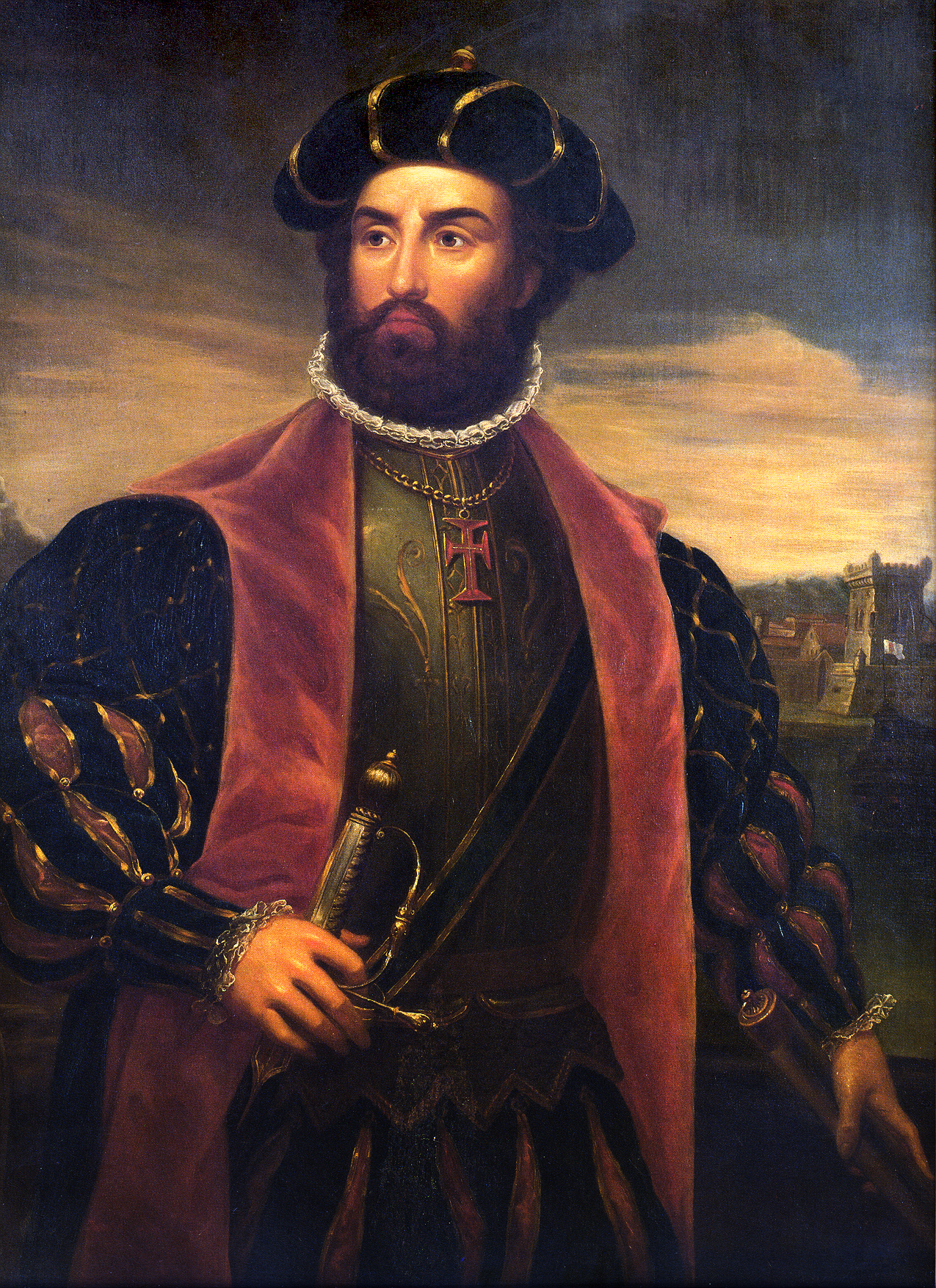
The Portuguese explorer, Vasco de Gama
Christopher Columbus and Vasco de Gama were the most successful explorers during this time, and they are still still the most famous today. While Columbus headed in the direction of the Americas, de Gama is known as the first European to sail around Africa to India - a very dangerous trip. 
Vasco de Gama's first route
The Portuguese rapidly expanded their spice trade after de Gama made it to India, finding huge economic success. As Portuguese explorers returned to Europe, the price of pepper in Lisbon dropped to one-fifth that in Venice. While the Portuguese dominated the spice trade for many years, Spain, Holland, and Britain were also important players in the global spice trade. During the 15th, 16th, and 17th centuries these countries fought Portugal for control of the Spice Islands. Ultimately, the Dutch took control of the spice trade in the 17th century. 

In conclusion, spices were crucial when it came to the expansion of trade routes and the discovery of new continents. Spices facilitated colonization of the East, the Americas and much more. Spices were key to development and they are still hugely important to culinary traditions all over the world today. Just think about it...what's your favorite dish? What spices does it include?

Fun fact:
Today, the most widely used spice in the world is the peppercorn. Here is a link to an article with some surprising facts about pepper. You won't believe some of them! For example, peppercorns were used as currency at one point in history!   


Photo citations: 

Photo 1: http://st.houzz.com/simgs/81c15ac30d85fdef_4-9666/traditional-cabinet-and-drawer-organizers.jpg
Photo 2: http://upload.wikimedia.org/wikipedia/commons/8/8d/Vasco_da_Gama_-_1838.png
Photo 3: https://s-media-cache-ec0.pinimg.com/originals/71/aa/4b/71aa4bfc4ca010cb379cd7e89fa68f60.jpg

Wednesday, September 3, 2014

The Founders of America were Plants?

Question 1: Tobacco and Cotton were two founder crops of the United States of America. Explain how and why, highlighting any connections / similarities between the crops.


The Seeds of A New World Power

Both tobacco and cotton played intrinsic roles in the foundation of the United States of America, empowering the new world colonialists to free themselves from British rule and build a strong economy.

It all began back in the early 1600s when English settlers initiated a new colony near the Chesapeake Bay. The new colony had nearly failed when a savior appeared in the form of a strange crop – tobacco seeds from Spanish plantations in the West Indies. Almost immediately Jamestown, Virginia changed from a tragic wasteland to a burgeoning economic power. This influx of money from the tobacco trade allowed the American colonies to develop a sense of independence from their British benefactors, who came to be seen as a real nuisance due to heavy taxes and a monopoly on exports from the colonies. Ultimately, it can be argued that tobacco led to the independence of the United States of America and the freedom that modern Americans cherish so much.


While the economic benefits of tobacco production can hardly be contested, it also led to the development of slavery in the United States which would go on to change the country forever. African slaves were first brought to America in 1619 during the advent of the colonies for the purpose of growing tobacco. The institution of slavery only became more popular with the introduction of cotton in the late 1700s. In the Southern states such as Georgia (my home state), Alabama, and Mississippi cotton was king. It is said that cotton accounted for more than half of American exports in the 1800s. Britain purchased the majority of raw cotton and produced cotton products in their factories – this powered the southern states to become exorbitantly wealthy and finally allowed America to be truly economically independent. However, the wealth that free labor created came to be morally questioned by the northern United States. The disagreement over slavery was one of the driving forces that ignited the American Civil War in 1861, which tore the United States in half.

After four years of conflict the Union (northern states) won the war, the south was left in shambles, and slaves were declared to be free. At that point, slaves had accounted for almost half of the population in the South. The years that followed, known as the Reconstruction era, were wrought with strife as society struggled to accept African-Americans as equal. It was a not a respectable time in American history and things only got worse until the Civil Rights Movement started to change America for the better and the south was slowly rebuilt. Today, the United States still hasn’t recovered completely from the devastating effects of slavery, which brought about by its tobacco and cotton production.


The tragic conclusion is that tobacco and cotton both left scars on America, even as they lifted the country up as the greatest economic power in the world. 


Cotton is still grown in Georgia today - thankfully in a much less morally reprehensible manner. This image depicts my friend and me standing in a cotton field in rural Georgia with our brothers and my dog. 

Photo citations: 
Photo 3: Personal photo

Related links: